

What Is Sheet Metal Stamping?
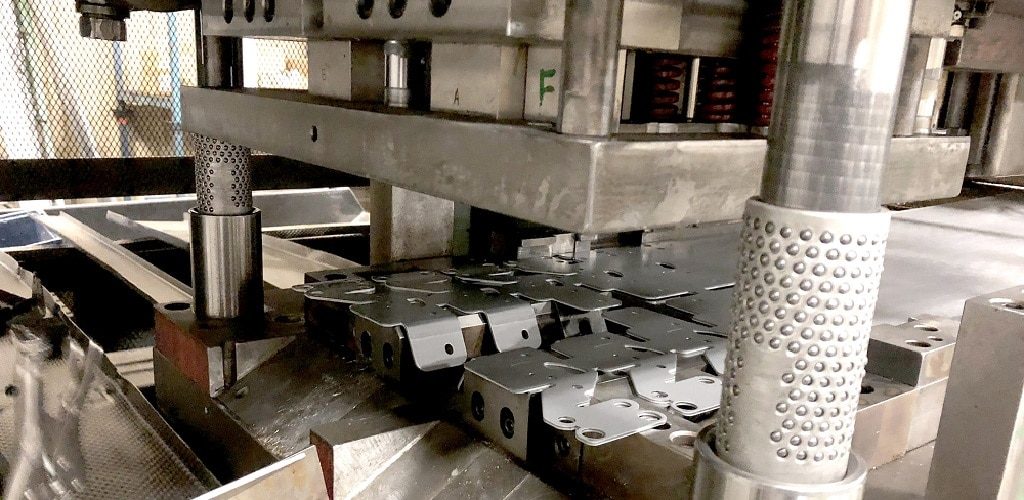
Sheet metal stamping is a manufacturing process that uses specially designed dies and press force to cut, bend, draw, emboss, or form flat sheet metal into the required component shape. Because the tooling is made for repeat production, the process is well suited to consistent output over large quantities.
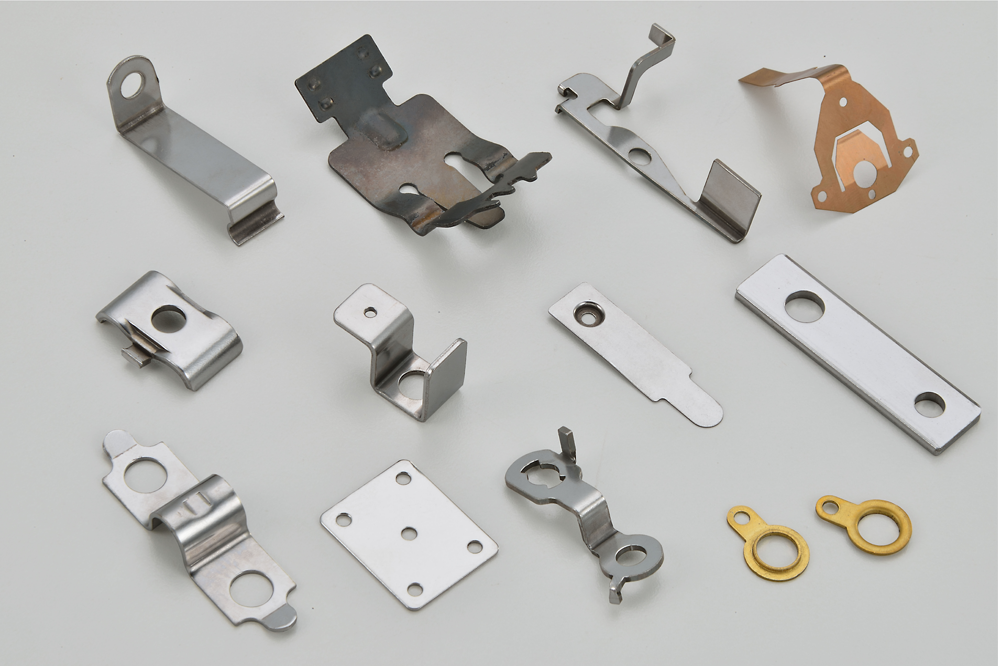
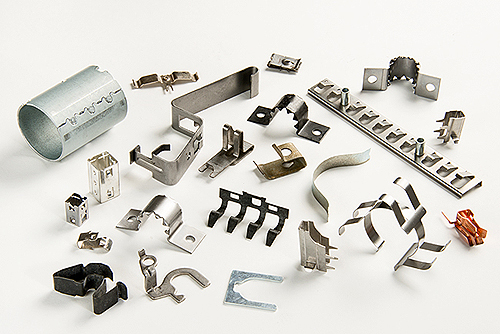
Stamping can produce simple washers and brackets as well as more complex formed components, covers, clips, panels, and housings. It is valued for production speed, repeatability, material utilization, and the ability to combine multiple operations in a controlled workflow.
Depending on part geometry, material thickness, and production volume, manufacturers may use single-operation dies, compound dies, progressive dies, transfer dies, or deep-draw tooling.
How the Sheet Metal Stamping Process Works
While exact steps vary by material, die design, and part shape, sheet metal stamping usually follows a structured production sequence that supports speed, repeatability, and controlled part quality.
Material and Tooling Setup
Sheet stock is supplied as blanks or coil and selected to match the required grade, thickness, and finish. The stamping die is mounted in the press and aligned for the production run.
Lubrication, feed setup, and tool checks help control wear, reduce friction, and support consistent part formation.
Pressing and Part Formation
The press applies controlled force to blank, pierce, bend, draw, coin, or emboss the sheet as it moves through one station or several stations, depending on the tooling design.
After forming, the component may move to deburring, tapping, welding, plating, coating, or inspection steps before final delivery.
Common Types of Stamping Operations
Sheet metal stamping is not limited to one single operation. Different tooling approaches are selected based on part geometry, material behavior, dimensional requirements, and production volume.
Choosing the Right Tooling
Choosing the right stamping method affects tooling cost, press speed, material flow, part accuracy, secondary operations, and overall manufacturing economy.
Blanking and Piercing
Blanking cuts the outer profile from sheet stock, while piercing creates holes or slots. These are among the most common stamping operations for flat parts.
Bending and Forming
These operations reshape the sheet without removing material, creating flanges, channels, ribs, tabs, and other formed features needed for assembly and stiffness.
Deep Drawing
Deep drawing pulls sheet metal into a die cavity to create cup-like or box-like shapes. It is often used for enclosures, covers, and shells with depth.
Progressive and Transfer Stamping
Progressive dies perform multiple operations as strip material advances through stations, while transfer systems move individual parts between stations for more complex geometries.
Advantages of Sheet Metal Stamping
- High production speed with strong repeatability across large batches.
- Good dimensional consistency when tooling and press setup are controlled.
- Efficient use of material, especially in optimized strip layouts.
- Ability to combine blanking, piercing, bending, and forming in one workflow.
- Lower unit cost at medium and high production volumes.
- Supports secondary processes such as welding, plating, coating, and assembly.
Limitations of Sheet Metal Stamping
Sheet metal stamping is highly effective, but it is not the best fit for every part or every production plan.
- Initial tooling cost can be high compared with simple fabrication methods.
- It is generally more economical for repeat production than for low-volume jobs.
- Part geometry is limited by material formability, thickness, and press capability.
- Springback, burrs, wrinkling, or tearing can occur if tooling or process control is poor.
- Complex parts may still require secondary machining or joining operations.
Common Stamping Materials
Sheet metal stamping is used with materials that can be cut and formed efficiently while meeting strength, corrosion resistance, conductivity, or appearance requirements.
Mild steel is widely used for general industrial parts and brackets. Stainless steel is selected for corrosion resistance and durability. Aluminum offers low weight and good formability, while copper and brass alloys are chosen where conductivity, appearance, or specific forming behavior is important.
Industries and Applications
Sheet metal stamping is used across industries that require repeatable formed metal parts with reliable dimensional control and efficient production.
Automotive
Brackets, reinforcements, clips, shields, seat parts, and formed structural components.
Electrical and Electronics
Enclosures, terminals, contacts, busbar-related parts, and panel components.
Industrial Equipment
Machine covers, mounting plates, guards, clips, and fabricated subcomponents.
Appliances and Hardware
Panels, hinges, supports, fastener components, and durable sheet metal hardware parts.
Sheet Metal Stamping at Prasad Engineering
At Prasad Engineering, we support sheet metal component requirements with a focus on process control, dimensional consistency, and practical production quality. We work to match the stamping operation, tooling approach, and material choice to the part design and production target.
Whether a project needs repeatable pressed components, formed sheet metal parts, or production-ready tooling support, our team can help evaluate the right stamping approach for the application.