

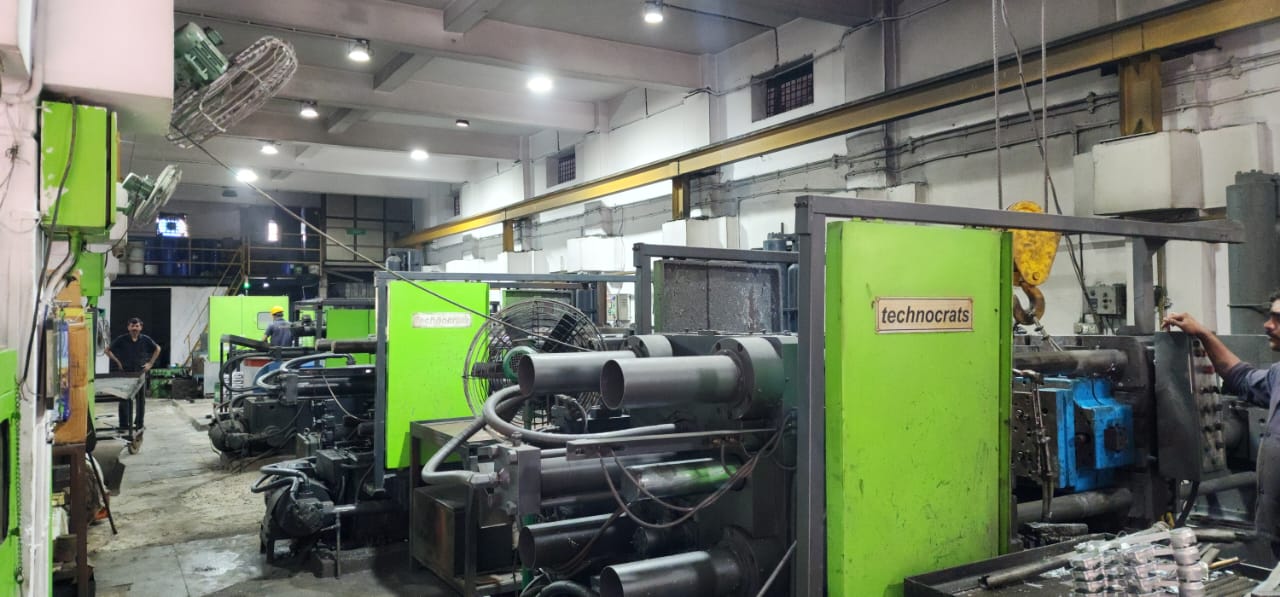
What Is Die Casting?
Die casting is a metal casting process in which molten metal is forced or fed into a steel mold to create components with defined shape, detail, and dimensional consistency. Because the mold is reusable, the process is well suited for repeated production runs.
Die casting is commonly used for non-ferrous metals such as aluminum, zinc, and magnesium alloys. The process is valued for producing parts with smooth surfaces, relatively tight tolerances, and reduced machining compared with many other casting methods.
Depending on the material, part design, and production volume, manufacturers may choose from different die casting methods such as hot chamber, cold chamber, gravity die casting, or low-pressure die casting.
How the Die Casting Process Works
While exact steps vary by method and alloy, die casting usually follows a structured production sequence that supports speed and repeatability.
Preparation
The die is cleaned, lubricated, and prepared for the next casting cycle. Proper die preparation helps improve release, finish quality, and tool life.
Molten metal is prepared at the required temperature based on the selected alloy and process.
Filling and Solidification
Molten metal enters the die cavity either by gravity, low pressure, or higher injection force, depending on the casting method being used.
The metal then cools and solidifies inside the die, taking the shape of the mold cavity.
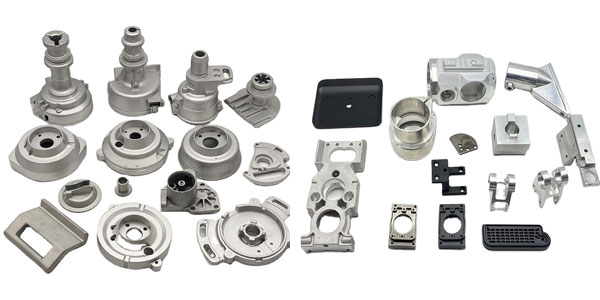
Common Types of Die Casting
Die casting is not limited to one single method. Different systems are selected based on alloy type, part geometry, required finish, and production volume.
Choosing the Right Method
Choosing the right die casting method affects tooling cost, part accuracy, production speed, mechanical properties, and overall manufacturing economy.
Hot Chamber Die Casting
Used mainly for lower-melting-point alloys such as zinc and magnesium. It offers fast cycles because the molten metal is held close to the injection system.
Cold Chamber Die Casting
Commonly used for aluminum and other higher-melting-point alloys. Molten metal is transferred from a separate furnace before injection into the die.
Gravity Die Casting
Molten metal fills the die cavity mainly under gravity. It is often chosen for simpler shapes, good mechanical properties, and practical tooling economics.
Low-Pressure Die Casting
Molten metal is pushed upward into the die using controlled low pressure. This can improve metal flow control and reduce turbulence for selected applications.
Advantages of Die Casting
- Good dimensional accuracy and repeatability for production parts.
- Smoother surface finish than many traditional casting methods.
- Fast cycle times for medium- and high-volume manufacturing.
- Ability to create thin walls, detailed shapes, and near-net parts.
- Reduced secondary machining in many applications.
- Reusable dies that support consistent output over repeated runs.
Limitations of Die Casting
Die casting is highly effective, but it is not the best fit for every part or every production plan.
- Initial die tooling cost can be high compared with simpler molds.
- It is generally more economical for repeated production than for very low-volume jobs.
- Material choice is usually focused on non-ferrous alloys.
- Very large or very thick parts may require a different process.
- Poor process control can lead to defects such as porosity or incomplete filling.
Common Die Casting Materials
Die casting is most often used with non-ferrous alloys that flow well and solidify into accurate, durable parts.
Aluminum alloys are valued for low weight, corrosion resistance, and broad industrial use. Zinc alloys are known for good detail, surface finish, and efficient production. Magnesium alloys are selected where low weight is especially important. In some applications, other specialized non-ferrous alloys may also be used depending on performance requirements.
Industries and Applications
Die casting is used across industries that require repeatable metal parts with reliable finish, shape accuracy, and production efficiency.
Automotive
Housings, covers, brackets, transmission parts, and structural components.
Electrical and Electronics
Enclosures, connectors, heat sinks, and small precision components.
Industrial Equipment
Pump bodies, machine parts, and durable production components.
Consumer Products
Appliance parts, handles, hardware, and decorative metal components.
Die Casting at Prasad Engineering
At Prasad Engineering, we support die cast component requirements with a focus on process control, dimensional consistency, and practical manufacturing quality. We work to match the casting method to the part design, alloy, and production target for dependable results.
Whether a project needs repeat production, good finish quality, or efficient tooling-based manufacturing, our team can help evaluate the right die casting approach for the application.